
Black Friday 2025 didn’t just bring another wave of deals - it reinforced a broader, accelerating shift in the UK retail landscape. Although official UK-wide breakdowns remain hard to pin down, recent global data combined with what we know from UK-focused retailers points to a clear trend: online retail is steadily consolidating its dominance over high-street shopping and shows signs of growth year-after-year.
Trends & Context: What we can observe
According to a recent retail-industry report, global ecommerce sales during Black Friday weekend 2025 grew by approximately 10.4% year-over-year, versus just a 1.7% rise in-store sales. This indicates that - even as consumers venture back to physical shops - online remains the fastest-growing channel.
For the UK specifically, anecdotal data from leading online retailers shows that each year the percentage of holiday-season sales accounted for by digital channels has risen. While precise public-facing numbers vary by brand and category, the consistent uptick in investment in delivery, user experience, retargeting and discount campaigns suggests UK consumers are increasingly treating online retail as their default during peak shopping periods.
Many UK ecommerce players now treat Black Friday not as a one-off sales event, but as the launchpad for their winter season marketing: meaning higher investments in paid acquisition, retargeting, site performance, and logistics well ahead of the main weekend.
With these contextual trends in mind, let’s break down what this shift has meant for different sectors - and how online-first strategies are paying off for those who lean in.
Sector-by-Sector snapshot: Who’s winning Black Friday - and why
Luxury & Jewellery
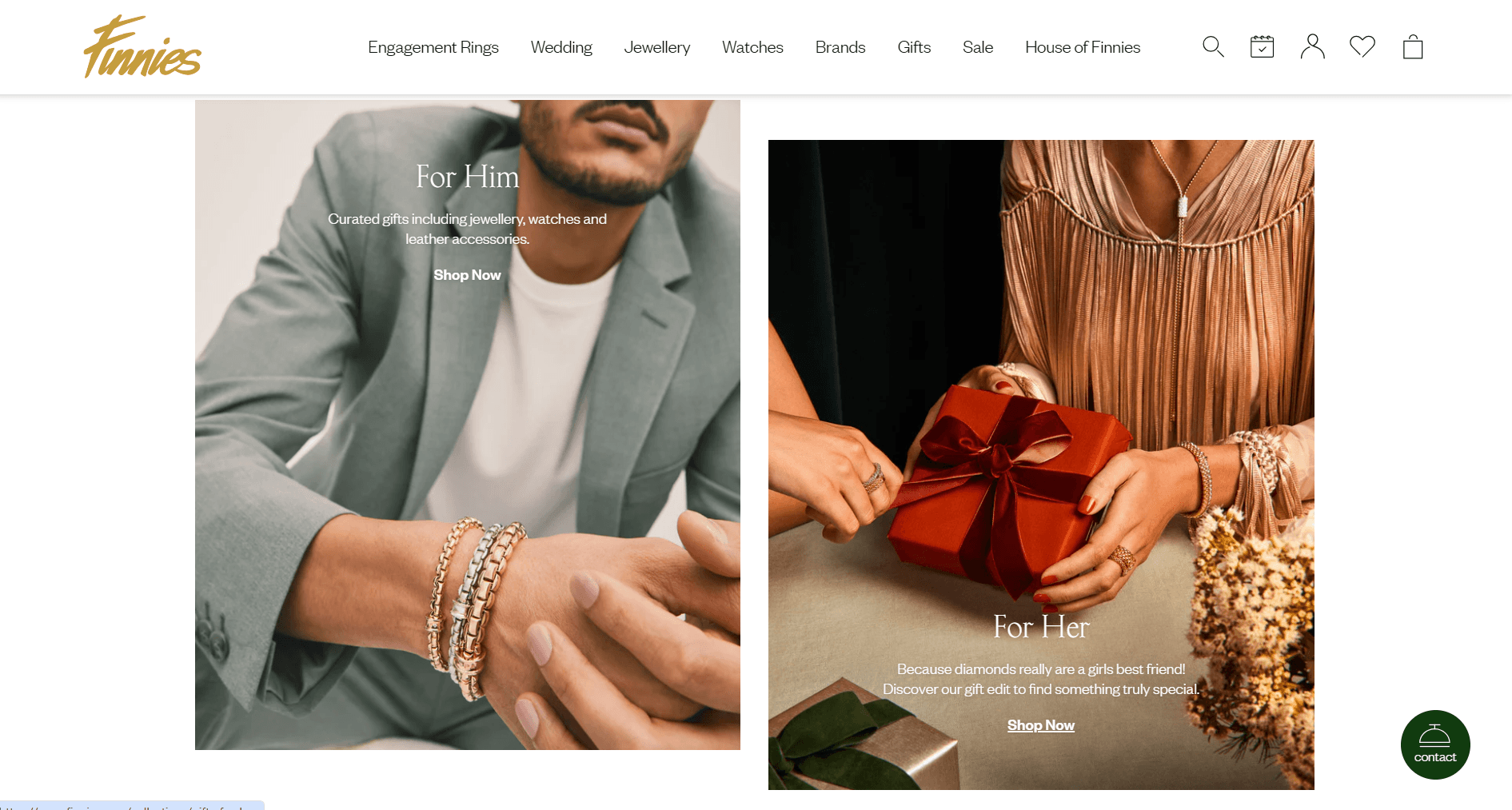
The luxury and jewellery sector continued its strong shift online this Black Friday, as shoppers increasingly trust digital channels for high-value gifting - thanks to improved imagery, secure delivery and premium online experiences. This trend is reflected in the success of brands like our own client, Finnies the Jewellers, who nearly tripled their Black Friday revenue year-on-year without increasing their discount, instead, we supported Finnies in smarter paid visibility and retargeting strategies. Their performance highlights how luxury retailers can win online by pairing trust-building experiences with strategic digital investment around Black Friday and Peak.
Home & Furniture
The home and furniture sector - once slow to move online due to concerns around delivery, assembly and returns - has seen a significant shift in consumer confidence, especially across peak periods like Black Friday. Improved logistics such as white-glove delivery, assembly services and real-time tracking have made customers far more comfortable ordering large, bulky items online, a trend reflected in the strong digital performance of UK retailers such as Dunelm, which continues to grow its e-commerce share through enhanced fulfilment options. Shoppers increasingly treat Black Friday as an opportunity not only to gift but to upgrade their homes ahead of the festive season, with interactive tools like “see it in your room” previews - popularised by brands such as Ikea and John Lewis - playing a major role in boosting conversion. Retailers offering clear shipping information, flexible returns and improved visualisation tools are now far outperforming those relying solely on traditional showroom experiences.
Outdoor & Athleisure
The outdoor and athleisure market continues to thrive online, driven by the UK’s ongoing interest in fitness, wellness and outdoor lifestyles a - surge that peaks around Black Friday as shoppers prepare for winter runs, hikes and new-year training goals. Brands like Gymshark and Sweaty Betty have capitalised on this momentum by offering extensive online size and style ranges that far exceed what most physical stores can stock, while maintaining generous return policies that give customers confidence when purchasing performance gear that relies heavily on fit. With many consumers browsing from home during a busy retail weekend, the ability to compare multiple stores quickly gives ecommerce brands a distinct advantage, something leveraged particularly well by our own client, Rab, whose comparison tools and online-first product discovery experience continues to draw high-intent shoppers. As a result, the sector consistently sees strong digital conversions during Black Friday, reinforced by seamless returns, richer product information and the convenience of shopping across several retailers in minutes.
What this trend means for UK ecommerce in 2026 & beyond
Online-first should be the default strategy. Across nearly every sector, digital offers broader reach, better conversion potential, and scalable repeatability versus brick-and-mortar - particularly during peak seasons.
Paid acquisition + retargeting is more effective than blanket discounting. As shown by Finnies, smart budget allocation can outperform deeper discounts - preserving margins while boosting volume.
UX, logistics and customer trust are critical differentiators. For sectors like luxury and furniture, the “online experience” must match or exceed the reassurance of physical shopping.
Smaller brands now have a real shot at scaling. The decline of physical-only retail levels the playing field: once you nail digital, you can compete with much larger stores.
Peak periods need preparation - not just discounting. Success requires early investment, thoughtful creative, strong retargeting setups, and robust fulfilment operations to satisfy holiday-season demand.
Final thoughts
Black Friday 2025 has reinforced a trend many of us have believed in for years: the UK retail landscape is steadily moving online - and 2026 may finally be the tipping point where “digital-first” becomes the default for customers and brands alike. As we’ve seen through our own client wins like Rab and Finnies - success is now less about being the cheapest option, and more about being visible, reliable, and easy to buy from.
If you want to turn 2026 into your strongest year yet, now is the time to partner with a team who can help you outsmart competitors, maximise paid performance and build a strategy that truly delivers. Get in touch today!

I look after Unified's overarching marketing strategy and keep our marketing engine running with fresh content, speaking opportunities, award submissions and great partnerships.